|
(1882–1964) Impressionismus 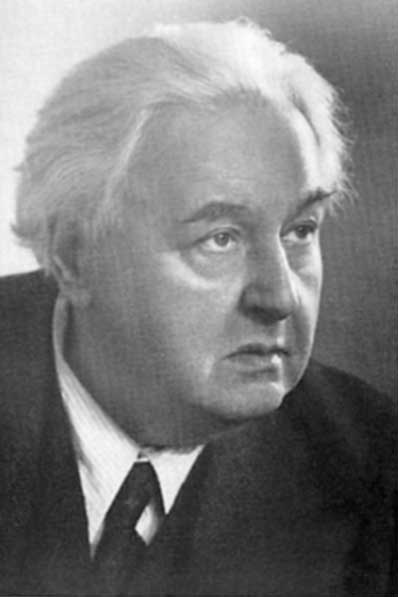 
|

|
||||||||||||||||||||||||||||||||||||||||||
|---|---|---|---|---|---|---|---|---|---|---|---|---|---|---|---|---|---|---|---|---|---|---|---|---|---|---|---|---|---|---|---|---|---|---|---|---|---|---|---|---|---|---|---|
|
(1882–1964) Impressionismus
|
|
||||||||||||||||||||||||||||||||||||||||||
|---|---|---|---|---|---|---|---|---|---|---|---|---|---|---|---|---|---|---|---|---|---|---|---|---|---|---|---|---|---|---|---|---|---|---|---|---|---|---|---|---|---|---|---|
|
For latest news on recording projects and concerts see: |
Note: Some of these choral works are also available in other arrangements.
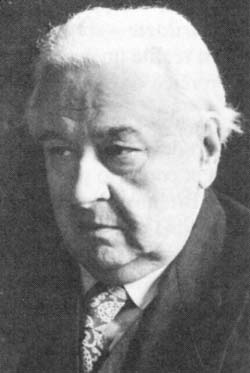 Joseph Marx (sometimes incorrectly spelled Josef Marx) has been an
active composer over a time scale of almost 50 years. During the first third of this
period he composed a major part of his 150 Lieder (works for voice and piano)
for which he gained worldwide success. Many of his songs were also
published in different other versions (with chamber ensemble/orchestra).
In an interview (1952) Marx said that he -and
also Hugo Wolf and Richard Strauss- actually wrote Lieder because
it was the fashionable thing to do. (see interviews in
the section "Audio Samples..."). Despite his image as a "song composer", his true
mastery and achievement is reflected in his works with orchestra
most of which he wrote between 1919 and 1932. By composing these
stunning orchestral compositions Marx finally brought to a
quintessential summation all the complex symphonic ideas that he
hadn't been able to express in his early works.
Joseph Marx (sometimes incorrectly spelled Josef Marx) has been an
active composer over a time scale of almost 50 years. During the first third of this
period he composed a major part of his 150 Lieder (works for voice and piano)
for which he gained worldwide success. Many of his songs were also
published in different other versions (with chamber ensemble/orchestra).
In an interview (1952) Marx said that he -and
also Hugo Wolf and Richard Strauss- actually wrote Lieder because
it was the fashionable thing to do. (see interviews in
the section "Audio Samples..."). Despite his image as a "song composer", his true
mastery and achievement is reflected in his works with orchestra
most of which he wrote between 1919 and 1932. By composing these
stunning orchestral compositions Marx finally brought to a
quintessential summation all the complex symphonic ideas that he
hadn't been able to express in his early works.
Most of the details below are the result of extensive investigations that took several months. As I have reported, only a handful of these works have ever been commercially recorded. This opus list was very difficult to compile since all existing lists that can be found in Marx biographies or music dictionaries are incomplete. After having evaluated almost every source that one can have access to, I am now able to present the first and only complete list of all works by Joseph Marx. (Please note that Marx didn't use opus numbers).
 Works by Joseph Marx that were later arranged by other composers
An excellent and complete German overview of Marx's works that was
perfectly made by Johannes Hanstein and that is based on my below work list, can be found here.
Orchestral works without voice/chorus:
1916-19:
1st piano concerto "Romantisches Klavierkonzert" (Romantic Piano Concerto) in E major, 37-43 minutes. This amazingly euphonic and extremely virtuosic work has been performed many times by Angelo Kessissoglu (who also performed its premiere), then frequently by the great Walter Gieseking and later in the 1970s and 80s by Jorge Bolet (who reported that he had discovered the score of his "favorite concerto" in the private music library of a friend), and it was eventually issued on a Hyperion CD (CDA66990) with super-virtuoso Marc-André Hamelin. The movements are:
Publisher: Universal Edition (UE 6018). A version for two pianos is also available.
The Austrian pianist Prof. Hans Petermandl who has performed Marx's 2nd piano concerto "Castelli Romani" twice (in 1978 with the Vienna Symphony Orchestra conducted by Karl Etti and in 1981 with the Munich Philharmonic Orchestra conducted by Lior Shambadal) told me that one of his pianist friends met Jorge Bolet who could not help saying: "The Romantic Piano Concerto is my favorite concerto. It is so beautiful, so wonderful, you should play it!"
Detailed information on the Romantic Piano Concerto is available here!
1920/21:
Eine Herbstsymphonie (An Autumn Symphony) in B for large orchestra
Dedicated to Mrs. Anna Hansa, famous singer and Marx's Lied performer in the 1910s and 1920s and Marx's lifetime romance and partner from around 1910 until his death in 1964.
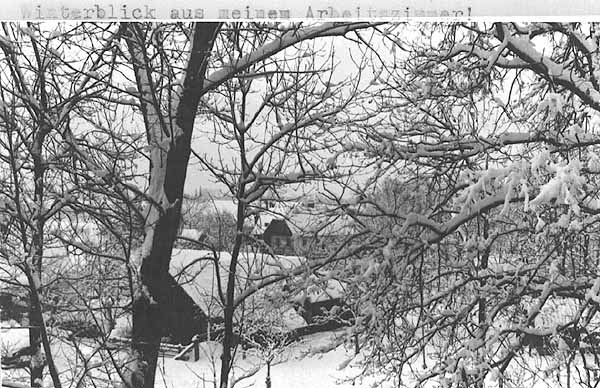
Marx began to compose his symphony in 1920 (just after having completed the Romantic Piano Concerto) and finished it 21 Nov 1921. He wrote it in a secluded countryhouse named "Villa Grambach" (Grambach is the name of a small village to the south of Graz). This house owned by Anna Hansa's family was the place where Marx preferably spent the summer months and composed a major part of his music.
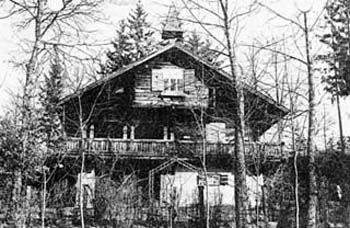
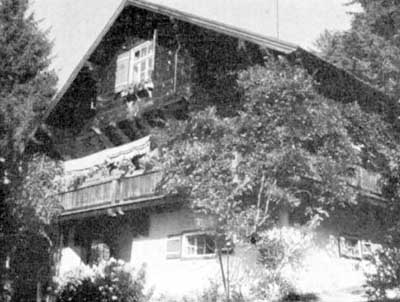
Villa Grambach near Graz - The place where Marx composed a
major part of his works and spent much time with his friends Franz
Schmidt, Franz Schreker, Leopold Godowsky, Wilhelm Kienzl, Karl
Böhm, Rudolf Hans Bartsch, Clemens Krauss, Anton Wildgans,
Angelo Kessisoglu and many more. The guestbook of Villa Grambach
shows the names of many composers and conductors of worldwide
fame. If you want to view a couple of great photos of this house
as it is looking today, please click here to see my Travelogue
The available information sources about the duration of the symphony vary between "75 minutes" (Universal Edition's catalogue) and "more than two hours" (newspaper articles from the 1920s). Due to the score of the symphony and the duration of "Feste im Herbst" (see "Latest news"), I would estimate that the symphony should last about 80-90 minutes if performed not rushed.
Orchestration: more than 30 wind instruments, percussion, celesta, two harps, piano and large string orchestra. The movements are:
Publisher: Universal Edition (UE 7438 and 7439)
LATEST NEWS
After 1927 the final movement of the symphony ("Herbstpoem") was performed separately only one last time on 22 Oct 1934 by conductor Bernhard Paumgartner in Vienna (orchestra unknown, likely Vienna SO). This is the very last performance date of any unrevised part of the Herbstsymphonie that I could find at all. Austrian newspaper articles from the 1960s that were sent me by Marx pupil and expert Prof. Dr. Wolfgang Suppan say that the "Herbstsymphonie was re-performed in the 1950s under the title Feste im Herbst" (aka "Herbstfeier", Autumnal Revelries, published in 1946). This is not correct since I found out by chance (in other words: by receiving the inspiration to compare the score of Herbstpoem with my recording of Feste im Herbst!) that the masterwork "Feste im Herbst" that was performed many times in Austria till the 1980s but never commercially recorded is nothing but a shortened and slightly revised re-issue of the Herbstsymphonie's final movement "Herbstpoem"!
What is the difference between "Feste im Herbst" and "Herbstpoem"?
The score of Feste im Herbst runs to 100 pages while the score of the Herbstpoem includes 115 pages. Feste im Herbst is lighter orchestrated (less wind instruments, less strings, only one harp instead of two) and it includes several rhythmical and instrumental changes compared with the Herbstpoem. But aside from this, Feste im Herbst is mainly identical with the final movement of the symphony.
Hard to believe that no-one ever knew that the outstanding work "Feste im Herbst" is a slightly revised version of the final movement of the Herbstsymphonie. Ironically, the first three movements of the Herbstsymphonie that evidently contain a large amount of the composer's theme material of the earlier works (in 1921 Marx had already composed 120-150 Lieder and most of his chamber music) were never heard again since the 1920s.
Marx who has educated more than a whole generation of composers, conductors and musicologists from all over the world during his 43 (!) years as a teaching professor in composition, harmony and counterpoint (he had 1255 students during this long period) most likely has never been happy about the fact that just his largest and most important work has never been performed completely again (let alone recorded) in his lifetime. Hence, the world of classical music clearly needs a complete recording of the Herbstsymphonie.
"Though derived from the last movement of the Autumn Symphony of 1921 "Feste im Herbst" is best regarded as a symphonic poem in its own right. As such it must serve as an appetizer for the much longer parent work from which it is extracted. Hearing this work leads to tantalizing conjecture about how many of the themes, so fleetingly heard in the first part of the symphonic poem, might have been developed at length in the first three movements of the symphony. "Feste im Herbst", in its 1946 revision, marks both the high water mark of German Romanticism and its ebbing in the face of more modern and less lyrical developments. It is a vast confluence of multiple influences, from the Brahms of the second symphony and the Bruckner of the fourth, through Slavonic, even Dvorak-like, dance measures to the impressionism of Debussy. All these are welded together with a Latin lucidity that recalls Respighi. It is the genius of Marx that he weaves these desperate threads together into a design that is in the end totally his own. A great sonorous culmination of the romantic, the very Autumn of the genre. After this there could only come the bleak winter of atonalism and intellectualism. Yet it is a joyous farewell, a rich and glowing sunset that turns the leaves to gold as they fall." (John Rowland Carter)
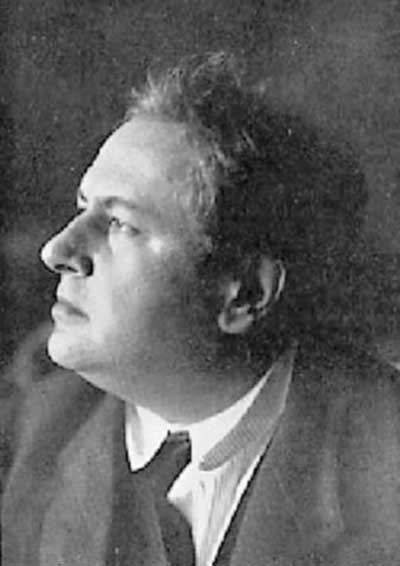
Joseph Marx in 1925, during the great success of his Autumn
Symphony
1922-25
In this period Marx wrote three breathtakingly impressionistic works that are also known as "Naturtrilogie", "Natur-Trilogie" or "Natur-Suite" (Nature Trilogy or Nature Suite):
Detailed information on the Idyll is available here!
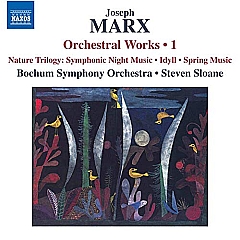
NEWS: A truly gorgeous recording of this "Nature Trilogy" has been released on ASV! For more information on Vol. 1 of the "Complete Orchestral Music" series please click here.
1928:
Festliche Fanfarenmusik (Festive Fanfare Music) in B major for 22 brass instruments and small percussion set. About 4-5 minutes.
Publisher: Universal Edition (UE 18731)
1929:
Nordlands-Rhapsodie (Nordic Rhapsody). About 30-35 minutes. Based on Pierre Loti's novel "An Iceland Fisherman" (1886) about an Icelandic love tragedy, and that's how this remarkable work sounds like. The movements are:
Publisher: Universal Edition (UE 11598)
1929-30:
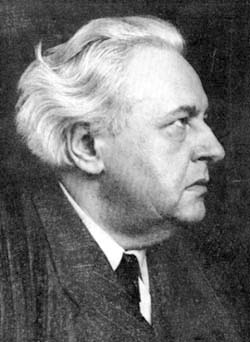
2nd piano concerto "Castelli Romani" in E flat major: Three pieces for piano and orchestra. 30-35 minutes. Marx had always been inspired by the beautiful landscapes and monuments of Italy since he had been travelling to Italy many times as a child (because of his mother who was half Italian). This stunning work is one of Marx's most delightful declarations of love to Italy and its beauty.
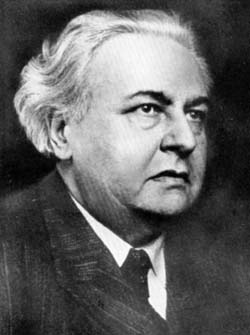
Walter Gieseking performed the premiere of this virtuoso concerto and also was the soloist in numerous later performances till the 1950s. Castelli Romani has besides been performed in the United States and in several European countries (among others in England for the BBC) at least till the late 1950s. The Austrian pianist Frieda Valenzi has given many performances of this work with various Austrian orchestras in the 1950s and 60s. Later, in 1978 and 1981, another Austrian pianist, Hans Petermandl, performed the work twice, while the German pianist Julius Bassler frequently performed its 3rd movement with several German radio orchestras from the end of the 1960s to the end of the 1970s. The most recent performance of "Castelli Romani" took place on March 28/29, 1982, in the Stefaniensaal of Graz (pianist Alexander Jenner and the Grazer Philharmonisches Orchester conducted by Peter Schrottner). The movements are:
Publisher: Universal Edition (UE number not available). A version for two pianos is also available.
NEWS: The two piano concerti "Romantisches Klavierkonzert" (Romantic Piano Concerto) and "Castelli Romani" were recorded by the Label ASV with the American virtuoso David Lively as Vol. 4 of the Complete Orchestral Music series. For further information please click here.
1941-42:
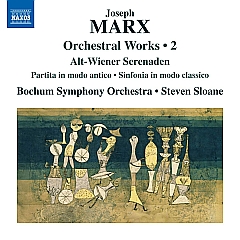
Alt-Wiener Serenaden (Old Vienna Serenades) for large orchestra. About 17-21 minutes. Dedicated to the Vienna Philharmonics on the occasion of their 100th anniversary. Composed within his tendency to classicism, in a style between Haydn and Schubert but it also includes Marx's characteristic elements of impressionism. Marx wrote it during his final work period in which he also composed his string quartets. The movements are:
Publisher: Universal Edition (UE 11358)
1944:
"Sinfonia in modo classico" for string orchestra. About 26 minutes. This is a string orchestra version of his own "Quartetto in modo classico" (not yet recorded in this string orchestra version). Publisher: Doblinger, Vienna. Score available. The movements are:
1945:
"Partita in modo antico" for string orchestra. About 26 minutes. This is a string orchestra version of his own "Quartetto in modo antico" (not yet recorded in this string orchestra version). Publisher: Doblinger, Vienna. Score available. The movements are:
NEWS: The above three orchestral works in traditional style were recorded as Volume 3 of the series (ASV). For further information please click here.
1946:
"Feste im Herbst" (also known as "Herbstfeier"; "Autumnal Revelries") for large orchestra. About 25 minutes. Is practically identical with the final movement of the Herbstsymphonie (for details see "Latest news" above where also an analysis of this work is given). Marx published this work in 1946 obviously as a reaction to the sad fact that the Herbstsymphonie hadn't been performed again over the last 10-15 years (the first three movements of the symphony even hadn't been performed for 20 years). The score is available at Universal Edition but one should note that this work is almost identical with the final movement of the Herbstsymphonie that has never been completely performed since the 1920s. Hence, a world premiere recording of "Feste im Herbst" should by all means bring on a first recording of the whole symphony.
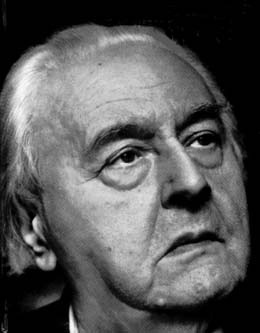
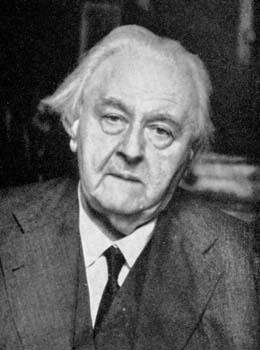
Joseph Marx at his home in Vienna, Traungasse 6
(1963).
For more photos of this house please click here
 Back to the overview of this chapter
Symphony No. 1 (1901)
Symphony No. 2 (1906)
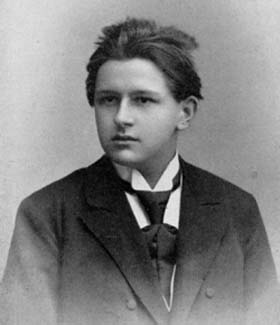
My knowledge of these two symphonies is based on a letter written by Marx after the premiere of the Herbstsymphonie. There he wrote: "In fact, this symphony is my third symphony since I always kept secret my first symphony that I composed at the age of 19 and also my second one that I wrote at the age of 24." Due to the Liess biography one of these youth symphonies is in C sharp minor (I couldn't figure out which one, likely No. 2). Fact is that Marx reused themes of the adagio part/movement of the C sharp minor symphony later in his Herbstsymphonie.
One of the two youth symphonies is known as "Symphony in one movement for orchestra" and due to the Austrian National Library it has indeed an adagio part. These youth symphonies have never been published as Universal Edition doesn't have their scores. However, the score (a rough draft of 11 pages) of the unfinished "Symphony in one movement for orchestra" (that might be identical with the "Symphony in C sharp minor" that is mentioned in the Liess biography since they both include an adagio part) can be found at the Austrian National Library. Due to the first page of the score this symphony is Marx's 4th work (it's titled "opus 4" although Marx didn't use opus numbers. Perhaps Marx used opus numbers only for his earliest works and then gave up numbering after he had begun to compose his first huge series of Lieder.)
Piano Concerto. The score (a rough draft of 13 pages) can be found at the Austrian National Library. One might assume that this is the rough draft of his first piano concerto, the Romantisches Klavierkonzert that was written in 1919.
Fragmentary rough draft of a work for string orchestra (4 pages, Austrian National Library). No more information available.
Unidentified stage play, obviously never continued nor finished: On 4 Apr 1926 a journalist asked Marx about his current composing projects. Marx answered: "At the moment I am composing the Nordic Rhapsody and a stage play that is not an opera." Unfortunately I couldn't find out which work Marx was referring to. None of the rough drafts of Marx's orchestral works at the Austrian National Library can be connected with that obscure stage play.
Rough draft for a fanfare music (10 pages; Austrian National Library).
"Island-Suite" (1927-28, "Iceland Suite"). The unfinished score (a rough draft of 34 pages) of this work can only be found at Austrian National Library. In order to find out if "Island-Suite" is the rough draft of Marx's next work "Nordlands-Rhapsodie" one would have to compare the two scores. However, the fact that the "Nordlands-Rhapsodie" is based on the novel "Iceland Fisher" by Pierre Loti might be an indication of this assumption.
"Symphonische Rhapsodie" (Symphonic Rhapsody) for large orchestra (1929). About 9 minutes. This work is identical with the 1st movement of the Nordlands-Rhapsodie (see above). It was sometimes performed separately.
"Symphonische Tänze" (Symphonic Dances) for large orchestra. About 9 minutes. It seems to be a short version or a kind of variation on several themes from "Feste im Herbst" (see above; also see "Latest news" above) or a variation on themes that are directly taken from the "Herbstpoem" (final movement of the Herbstsymphonie). None of the sources has the score of this work of which I have an old recording. I guess that the score got lost after the work was performed and recorded by the Austrian radio station. Performance details due to the announcement at the beginning of my recording: Vienna Symphony Orchestra conducted by Karl Etti who was one of the main conductors of Marx's orchestral works besides Max Schönherr and Karl Böhm.
Back to the overview of this chapter
Works for voice and orchestra:
Since Universal Edition was unable to provide a list of all "official" English titles (esp. regarding Marx's vocal works that were mainly translated by John Bernhoff), the English titles shown below were translated by myself and are therefore supplied without liability for errors.
(The scores of the following works for voice and orchestra/chamber ensemble can all be obtained at Universal Edition. The English lyrics are also available at UE for most of these works.)
NEWS: The works for voice and orchestra were recorded for ASV (as Vol. 2 of the CD series) with the soloists Angela Maria Blasi (soprano) and Stella Doufexis (mezzo-soprano). For more information please click here.
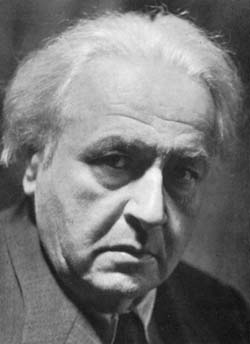
"Verklärtes Jahr" (Transfigured Year) -
A song cycle for medium voice and orchestra (1930-32). About
18-21 minutes. This is the last work of Marx's main "orchestral
period" (1919-1932). Its version for voice and piano has already
been commercially recorded by FY Solstice (see "Discography") but
one can hear an enormous difference between the sound worlds
created by these two different versions. This orchestral Song
Symphony is one of the most evident proofs for the fact that
Marx had never been able to realise his complex ideas before in his
works for voice and piano although the phenomenal pianistic
virtuosity of their piano parts creates a huge variety of
impressionistic effects that we won't hear in the piano parts of
songs written by any other Lied composer. Some critics even wrote
that Marx's songs for voice and piano were nothing but "Piano
concertos with voice obligato".
"Verklärtes Jahr" in its miraculous
orchestral version brings together a number of the greatest "sound
effects" that Marx has ever composed. Its five movements are:
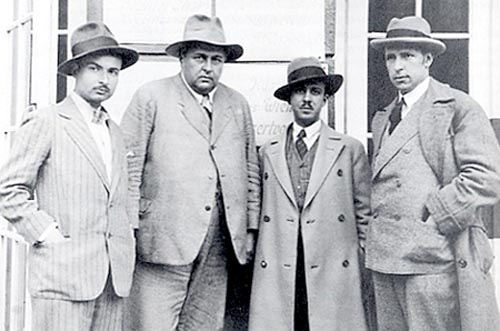
Marx with some of his renowned Turkish students (Vienna, 1931):
Necil Kazim Akses (left), Marx, Cemal Resit Rey and Hasan Ferit Alnar
Orchestral scores of some of the following Orchestral Songs
were used as film music in the movie "Cordula" (1950). More information and
pictures of this movies's cinema magazine
can be found here
Marx orchestrated most of the following songs in the 1930s.
"Am Brunnen" (At the Fountain) for medium voice and string orchestra (1912). About 1 minute. Lyrics by Paul Heyse. Also available in a version for voice and string quartet.
"Barcarole" for high voice and orchestra (1910). About 6 minutes. Lyrics by A. F. von Schack.
"Begegnung" (The Encounter) for medium voice and string orchestra (1912). About 2 minutes. Lyrics by Paul Heyse. Also available in a version for voice and string quartet.
"Der bescheidene Schäfer" (The unassuming Shepherd) for high voice and string orchestra (1910). About 2 minutes. Lyrics by Christian Weisse. Also available in a version for voice and string quartet.
"Der (Die) Liebste spricht" (The Darling is speaking) for medium voice and string orchestra (1912). About 1 minute. Lyrics by Paul Heyse. Also available in a version for voice and string quartet.
"Erinnerung" (Memory) for medium voice and orchestra (1911). About 3 minutes. Lyrics by Joseph von Eichendorff.
"Hat Dich die Liebe berührt" (If love hath entered thy heart) for high or low voice and orchestra (1908). About 3 minutes. Lyrics by Paul Heyse.
"Japanisches Regenlied" (Japanese Rain Song) for medium voice and orchestra (1909). About 2 minutes.
"Jugend und Alter" (Youth and Age) for medium voice and orchestra (1909). About 2 minutes. Lyrics by Walt Whitman.
"Maienblüten" (May Blossoms) for high voice and orchestra (1909). About 2 minutes. Lyrics by Ludwig Jacobowsky.
"Marienlied" (Song of Mary) for high voice and orchestra (1910). About 3 minutes. Lyrics by Novalis.
"Piemontesisches Volkslied" (Piemontesian Folk Song) for high voice and string orchestra (1911). About 1 minute. Lyrics by Max Geissler. Also available in a version for high voice and string quartet.
"Selige Nacht" (Blessed Night) for high voice and orchestra (1913/14). About 3 minutes. Lyrics by Otto Erich Hartleben.
"Sendung" (The Message) for medium voice and string orchestra (1912). About 1 minute. Lyrics by Paul Heyse. Also available in a version for voice and string quartet.
"Sommerlied" (Summer Song) for high voice and orchestra (1909). About 1 minute. Lyrics by Emmanuel Geibel.
"Ständchen" (Serenade) for high voice and string orchestra (1912). About 2 minutes. Lyrics by Paul Heyse. Also available in a version for high voice and string quartet.
"Und gestern hat er mir Rosen gebracht" (He brought me roses yesterday) for high voice and orchestra (1908). About 2 minutes. Lyrics by Th. Lingen.
"Venetianisches Wiegenlied" (Venetian Lullaby "Nina Ninana") for medium voice and orchestra (1912). About 3 minutes. Lyrics by Paul Heyse. Also available "Venetianisches Wiegenlied" for medium voice and string orchestra with harp. Additionally available in a version for medium voice and string quartet with harp. At the Austrian National Library besides available in a version for for voice and string quartet.
"Waldseligkeit" (Bliss in the Woods) for high voice and string orchestra (1911). About 3 minutes. Lyrics by Richard Dehmel. Also available in a version for high voice and string quartet.
"Wofür" (For what) for medium voice and string orchestra (1912). About 1 minute. Lyrics by Paul Heyse. Also available in a version for voice and string quartet.
"Zigeuner" (Gipsy) for high voice and orchestra (1911). About 3 minutes. Lyrics by Max Geissler.
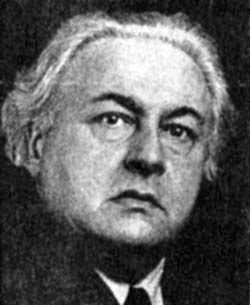
Besides, Marx arranged five songs by Hugo Wolf for voice and orchestra:
Back to the overview of this chapter
Choral works with/without orchestra:
(Scores are available at UE. Not yet recorded.)
|
My following article was issued in the monthly newsletter of European Cultural Services (Editor: Heinz Prammer, Vienna) that is sent to thousands of choral societies in Europe. Click here to visit the website of European Cultural Services. Renaissance of Joseph Marx's outstanding choral worksWritten in German and translated to the English
|
Works for mixed chorus:
"Herbstchor an Pan" (Autumn Chorus to Pan)
for mixed choir, boys' choir, orchestra and organ (1911).
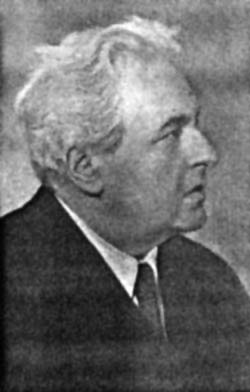 About 20 minutes, lyrics by Rudolf Hans Bartsch. The subtitle of
this symphonic poem is: "In memory of a luminous autumn day
in the South Steiermark". Due to Liess's biography this
work creates a glimmering world of impressionism and makes
intensive use of the art of counterpoint. With its powerful
sonority and effective polyphony this treasure is said to be the
precursor of the Herbstsymphonie. Furthermore, Marx
here reuses elements of the main theme of "Windräder"
(Wind Mills) that is said to be his most brilliant song at
all. No performance dates available at all. Seemingly never been
performed again since its year of origin. DECEMBER 2001: As reported by Dr. Roman
Rocek from the Austrian Richard Maux Society, there has been a
performance of "Herbstchor an Pan" in the 1950s in the
Musikverein. [Note: Richard Maux, 1893-1971, a vastly neglected
Austrian late romantic who was friends with Marx and composed in a
similar style.] Due to the piano scores of "Herbstchor an Pan" and
"Morgengesang", Marx's charmingly romantic impressionism was here
developed to its utmost level only surpassed later in his
Herbstsymphonie. I hereby call upon all choirs to cooperate
with their orchestras in order to perform or record these two
masterworks of romantic choral music.
About 20 minutes, lyrics by Rudolf Hans Bartsch. The subtitle of
this symphonic poem is: "In memory of a luminous autumn day
in the South Steiermark". Due to Liess's biography this
work creates a glimmering world of impressionism and makes
intensive use of the art of counterpoint. With its powerful
sonority and effective polyphony this treasure is said to be the
precursor of the Herbstsymphonie. Furthermore, Marx
here reuses elements of the main theme of "Windräder"
(Wind Mills) that is said to be his most brilliant song at
all. No performance dates available at all. Seemingly never been
performed again since its year of origin. DECEMBER 2001: As reported by Dr. Roman
Rocek from the Austrian Richard Maux Society, there has been a
performance of "Herbstchor an Pan" in the 1950s in the
Musikverein. [Note: Richard Maux, 1893-1971, a vastly neglected
Austrian late romantic who was friends with Marx and composed in a
similar style.] Due to the piano scores of "Herbstchor an Pan" and
"Morgengesang", Marx's charmingly romantic impressionism was here
developed to its utmost level only surpassed later in his
Herbstsymphonie. I hereby call upon all choirs to cooperate
with their orchestras in order to perform or record these two
masterworks of romantic choral music.
"Ein Neujahrshymnus" (A New Year's Hymn) for mixed choir and orchestra (1914). In Autumn 2004, this work was orchestrated by Stefan Esser and Berkant Haydin (author of this website; see red info box below). Text: Joseph Marx. Duration: approx. 10 minutes. A majestic, stirring hymn to life. Due to the highly inspired text of Joseph Marx, this work can also be performed as a sacred work. Film music composers arranged fragments of it for mixed choir and orchestra in the year 1950.
"Berghymne" (Mountain Hymn) for mixed choir and orchestra (possibly written in 1910). Text: Alfred Fritsch. Duration: approx. 4 minutes. The original score of this dazzling rarity is available as a "particell" (reduced score) i.e. a kind of extended piano score including choral voices (unison) and a few basic orchestral voices. It was fully arranged by Stefan Esser and Berkant Haydin for mixed choir and orchestra in 2005.
|
"A New Year's Hymn" and "Mountain Hymn" by Joseph Marx Orchestrated by Stefan Esser and Berkant Haydin (the author of this website)! * * * published by Universal Edition * * * Click here for detailed info, music samples (MP3) and score pages |
Works for male chorus:
"Morgengesang" (Morning Chant) for male choir and orchestra (1910; orch. 1934 by A. Wassermann). About 8 minutes, lyrics by Ernst Decsey. Also available in a version for male choir, brass instruments and organ, and besides in another version for male choir and brass orchestra. "Morgengesang" was originally written for male choir and orchestra in 1910. In the summer of 1932, Marx arranged it for brass orchestra on the occasion of the 100th anniversary of Goethe's death. The latest performances of which I know have been in 1947 (Wiener Schubertbund and the Vienna Symphony Orchestra conducted by Prof. Viktor Keldorfer) and in 1951 (in Switzerland), and also by the Wiener Schubertbund in 1954 (with organ), in 1956 performed by the Niederösterreichisches Tonkünstlerorchester conducted by Leo Lehner and in 1969 conducted by Heinrich Gattermeyer (without orchestra).
„Morgengesang" for male choir, brass orchestra and organ.
„Morgengesang" for male choir and brass orchestra.
"Ein Neujahrshymnus" for male choir and organ.
„Abendweise" (Evening Melody) for male choir, 4 horns, 2 trombones, tuba, timpani and organ (1912). Dauration: 14 minutes. Text: Ernst Decsey.
"Gesang des Lebens" (Song of Life) for male choir and organ (1914). This work is dedicated to the famous Austrian chorus master Viktor Keldorfer and the Wiener Schubertbund (Vienna Schubert Choral Society). Duration: 6 minutes. Text: Otto Erich Hartleben (from "Diogenes"). This work is also available at Universal Edition in another version for medium voice and piano.
Unpublished (unfinished) choral works (score drafts available at the Austrian National Library):
Back to the overview of this chapter
(Scores are available at UE. Partially recorded.)
Works for violin and piano:
1st sonata for violin and piano in A major (1913). About 55-65 minutes. Already recorded, see "Discography". The movements are:
(The 4th movement was also released as "Phantasie und Fuge" for violin and piano.)
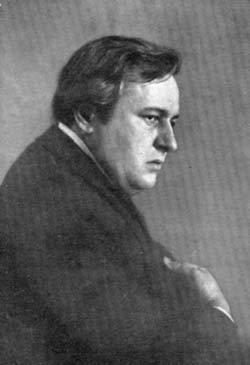
2nd sonata ("Frühlingssonate", "Spring Sonata") for violin and piano in D major (1945). About 19-23 minutes. The existing recording (see "Discography") is nothing but a re-issue of a performance from almost 50 years ago. Though composed during the final composing period in which Marx turned towards classicism this enjoyable sonata is rather written in the colorful style of most of his chamber music from around 1910-1915. Here one can be witness of Marx's tendency to reusing memorable theme material from his own earlier chamber and vocal works and developing it within his later orchestral and other works, sometimes even if these were written decades later. So this sonata from the mid 1940s begins with a remarkable tune that can also be heard at the beginning of the opening movement of his first violin sonata from 1913, and we can also hear other short sequences that were used in the first half of "Feste im Herbst" from 1946 (or in the final movement of his Herbstsymphonie (1920/21) that is practically identical with "Feste im Herbst" as shown above).
Brief excursion into the topic "Reuse of material": Prokofiev often reworked material in several forms, so did Vaughan-Williams. Mozart and others arranged their opera tunes for wind band. Debussy's piano music is arranged for orchestra. Numerous other composers wrote an opera and a ballet by the same name and used the same material. A hundred years ago most composers transcribed opera and orchestral music for piano. Mahler movements were often performed alone. The ballets of Peter Tchaikovsky were filleted to make shorter works with other names and plots. The Khachaturian violin concerto exists in a near note for note version for flute and orchestra. Korngold re-used many of his Hollywood film music themes in his late orchestral works. There are plenty of even more striking examples, e.g. Elgar who is known for having extensively repeated a few themes.
The movements of Marx's "Spring Sonata" are:
Works for cello and piano:
Suite for cello and piano in F major (1914). About 35 minutes. Already recorded, see "Discography". The movements are:
"Pastorale" for cello and piano (1914). About 6 minutes. Already recorded, see "Discography".
Works for trio ensemble (not yet recorded):
"Trio-Phantasie" (Trio Fantasy) for violin, cello and piano in G minor (1913/14). About 40 minutes. Not yet recorded. The movements are:
Works for piano quartet (not yet recorded):
"Klavierquartett in Form einer Rhapsodie" (Piano Quartet in rhapsodic form) (1911). Score: 53 pages. Duration approx. 35 min.
"Ballade (Ballad) for violin, viola, cello and piano" in A minor (1911). Duration approx. 17 min.
"Scherzo for piano quartet" (1911). Score: 33 pages. Duration approx. 15 min.
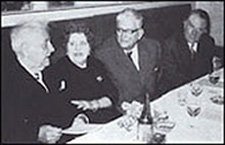
Joseph Marx - Anna Hansa
Works for string quartet:
String Quartet in A major (1936). This is the original version of the "Quartetto chromatico".
"Quartetto chromatico" (1936, rev. 1948). Duration approx. 29 min. This is a shortened and revised version of the "String Quartet in A major" from 1936. Already recorded, see "Discography". The movements are:
"Quartetto in modo antico" (1937/38). Duration approx. 26 min. Already recorded, see "Discography". Its string orchestra version is available at Doblinger. The movements are:
"Quartetto in modo classico" (1940/41). Duration approx. 25 min. Already recorded, see "Discography". Its string orchestra version is available at Doblinger. The movements are:
Rough draft of a work for string quartet (only 3 pages; Austrian National Library)
Works for other chamber ensembles of which the scores are not available:
"Grand Duo" for two cellos (titled "opus 5")
"Adagio for cello"
(My knowledge of these two works is based on documents that are about 50 years old. No more information available.)
UPDATE: These two works (Grand Duo for two cellos and Adagio for cello)
were written by another composer named Joseph M. Marx (1792-1836):
JOSEPH M. MARX, born in 1792 at Wurzburg, where be also received his musical education, began his artistic career as member of the Theatre orchestra at Frankfort-on-the-Main, whence he went to Vienna, in order to study under Merk. Later on he worked in the Stuttgard orchestra, until he was appointed first Violoncellist at Carlsruhe. He finally was musical director there, and died while working in this capacity on November 11, 1836.
His daughter, Pauline, made her appearance on the stage as a singer during the years 1880-40.
Chamber works that are identical with movements of chamber works listed above:
"Phantasie und Fuge" (Fantasy and Fugue) for violin and piano. This is identical with the final (4th) movement of the Sonata for violin and piano in A major from 1913 (see above) that has already been recorded (see "Discography"). Its score is separately available.
"Menuett" for cello and piano. This is identical with the 3rd movement of the Suite for cello and piano in F major (1914, see above) that has already been recorded (see "Discography"). Its score is separately available.
 Back to the overview of this chapter
(Scores are available at UE. Major part not yet recorded.)
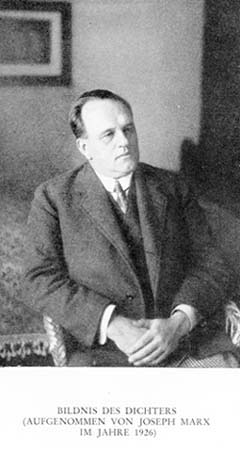
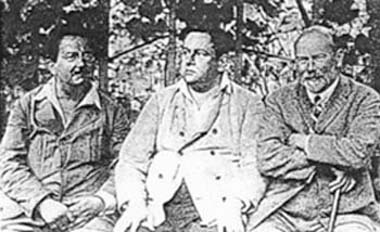
4 Lieder with various small chamber ensemble written in 1916 and based on lyrics by Anton Wildgans (1881-1932) who was one of Marx's closest friends (photo shot by Marx in 1926):
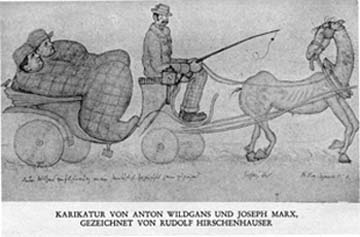
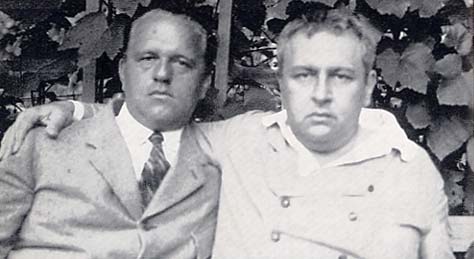
Works for voice and piano quintet:
"Valse de Chopin" for medium voice and piano quintet. About 4 minutes. Lyrics by Albert Giraud (from "Pierrot Lunaire").
Sommerlied "O Sommerfrühe, blau und hold" (Summer Morning Song) for voice and piano quintet. Lyrics by Emmanuel Geibel. The score of this work is only available at the Austrian National Library.
Works for voice and string quartet:
6 Lieder for voice and string quartet
that are also available in versions for voice and string orchestra
(see above):
[On 25 Jan 2001 Ildikó Raimondi and the Artis Quartet performed these six Lieder for voice and string quartet in a version for soprano at the concert hall of the Wiener Musikverein. Here we can see the living popularity of Marx's vocal compositions, at least regarding his songs for voice and piano/chamber ensemble as these are being performed occasionally.]
"Piemontesisches Volkslied" (Piemontesian Folk Song) for high voice and string quartet (1911). About 1 minute. Lyrics by Max Geissler. Also available in a version for high voice and string orchestra.
„Ständchen" (Serenade) for high voice and string quartet (1912). About 2 minutes. Lyrics by Paul Heyse. Also available in a version for high voice and string orchestra.
"Waldseligkeit" (Bliss in the Woods) for high voice and string quartet (1911). About 3 minutes. Lyrics by Richard Dehmel. Also available in a version for high voice and string orchestra.
"Venetianisches Wiegenlied" (Venetian Lullaby "Nina Ninana") for medium voice and string quartet with harp (1912). About 3 minutes. Lyrics by Paul Heyse. Also available in two other versions: for medium voice and orchestra or string orchestra with harp (at UE). At the Austrian National Library additionally available in a version for voice and string quartet.
 Back to the overview of this chapter
Six incredibly gorgeous piano pieces from 1916 of which the scores are available at UE and that have already been recorded (see "Discography"):

Universal Edition reported that the above six piano pieces will be
made available in November 2005 as "Digital Download" at the following web sites:
www.sheetmusicnow.com
www.universaledition.com/downloads
The following ten piano pieces (undated and not yet recorded) will hopefully be published by UE. I'm grateful to the pianist Jonathan Powell who has been evaluating all scores that I sent him in 2004. If UE should publish them, it is thanks to him.
And these are the remaining unpublished piano pieces that were declared by Jonathan Powell to be juvenile works or unusable incomplete drafts:
The "Corona-Collection No. 93", published by Universal Edition, includes Marx's own piano transcriptions of his following seven songs (the collection also includes his piano piece "Albumblatt" from 1916):
Also, the Austrian National Library has the scores of Marx's piano transcriptions of the following two works:
 Back to the overview of this chapter
On behalf of the author of this website, the German organist Arno Hartmann is currently working on an edition of the unpublished organ works by Joseph Marx, with the intention of having them published by Universal Edition as soon as possible.
The choral works with organ are listed above, see "Choral works with/without orchestra".
(The scores of the following organ pieces are only available at the Austrian National Library. Not yet recorded.)
"Symphonischer Prolog" (Symphonic Prologue) for organ (1904).
Undated organ pieces:
Besides, Marx arranged the following piece for solo organ of which the score is only available at the Austrian National Library:
Marx also wrote two works for high voice and organ of which the scores are available at UE:
Back to the overview of this chapter
According to a report by a former musician of the Graz Philharmonic Orchestra, the Austrian composer and conductor Johann Wilhelm Ganglberger (1876-1938) who was friends with Joseph Marx, has orchestrated a couple of Marx songs. These orchestral songs were performed in the 1970s by the Graz Philharmonics under Gustav Cerny or Ernst Märzendorfer (the performances must have been organized by the Musikverein für Steiermark, Graz). Unfortunately, this information has not been confirmed yet.
As reported to me by Dr. Steven Harlos (University of North Texas), there exists an orchestration of the "Menuett" (third movement of Marx's "Suite for Cello and Klavier" in F Major of 1914) in the music library of the above-mentioned university (Music Special Collections). According to Dr. Harlos, this arrangement by Emil Bauer which consists of 15 orchestral parts (including harmonium) appears to be a free adaptation, and the cello is not featured as soloist. It is from a collection of arrangements which were used for radio broadcasts in the 1920s and 30s, and it has never been performed at the University. The other listings by the name Emil Bauer show that he has also arranged works by Richard Strauss, Anton Bruckner, Carl Goldmark and others. Please click here to view the library's catalog entry. The same arrangement can be found in the music collection of the Austrian National Library.
Heinz Sandauer and Willy Schmidt-Gentner arranged parts of several orchestral songs of Joseph Marx ("Marienlied", "Hat Dich die Liebe berührt", "Und gestern hat er mir Rosen gebracht", "An einen Herbstwald") for the Film "Cordula" (1950, with Paula Wessely; Director: Gustav Ucicky; after the epic poem "Kirbisch" by Anton Wildgans). The movie also features an orchestrated part of Marx's "String Quartet in modo classico" arranged by the same musicians. However, their most striking arrangement of a Marx work in this movie seems to be the stunning orchestration of Marx's choral work "Ein Neujahrshymnus" ("A New Year's Hymn", arr. for mixed chorus, organ and orchestra!), which can be heard at the beginning of the film (approx. 2 minutes) and also at the end (for another 30 seconds): Neujahrshymnus-1950.mp3
In 2004, the composer Stefan Esser and I (the author of this website) orchestrated the above mentioned work "Ein Neujahrshymnus" (original version for male choir and organ) by arranging it for mixed choir and orchestra. Universal Edition, Vienna, has already confirmed the publication of our arrangement. For detailed information (incl. MP3 samples) please click here.
In January/February 2004, Stefan Esser and I also orchestrated Marx's reduced score of "Berghymne" ("Mountain Hymn") by arranging it for mixed choir (unison) and orchestra.. Click here for detailed info including a complete Demo recording as an MP3 file.
In 1934, the choral work "Morgengesang" (Morning Chant) was arranged for male chorus and orchestra by A. Wassermann (published by Universal Edition).
Marx's song "Nocturne" (1911; Otto Erich Hartleben) was arranged for solo piano by Dr. Franz Spieler (any information about Spieler would be welcomed).
Marx's piano piece "Prelude in e flat minor" (which he composed in 1916 together with the "Fuge") was arranged for 2 pianos by Louis Ree.
Back to the overview of this chapter Nächstes Kapitel

|
|
|
|
|
|
EIN NEUJAHRSHYMNUS & BERGHYMNE von Joseph Marx Orchestriert von St. Esser & B. Haydin * * * verlegt bei der Universal Edition * * * Hier weitere Infos und Hörbeispiele (MP3) |
|
Das Grazer Orchester recreation - Großes Orchester Graz spielte unter der Leitung von Michel Swierczewski die HERBSTSYMPHONIE (Stefaniensaal in Graz, Österreich) * * * Erste Aufführung seit fast 80 Jahren * * * Der Autor dieser Website hat diesem seltenen, bedeutenden Ereignis beigewohnt und berichtet hier ausführlich über die großartige Rezeption in der österreichischen Presse |
Die Joseph-Marx-Gesellschaft hat eine eigene Internetseite:joseph-marx-gesellschaft.org
Alle Anfragen an die Joseph-Marx-Gesellschaft (z.B. Spenden- und Beitrittsgesuche) sind an Herrn Berkant Haydin, Generalsekretär der Joseph-Marx-Gesellschaft, zu richten. Da die Gesellschaft sich ausschließlich über private Spenden und Fördergelder finanziert, wird hiermit um rege Beteiligung gebeten. |
| www.joseph-marx.org ist eine von Berkant Haydin gestaltete, rein private Homepage, die im Dienste der Information über Joseph Marx und der Freude an seiner Musik steht. www.joseph-marx.org ist nicht mit der o.g. Website der Joseph-Marx-Gesellschaft zu verwechseln. |
|---|